
Table of Contents
You went through the post-vasectomy procedure. You rested, recovered, and went back to your life. But here is the thing most men do not realise until it is too late - a vasectomy does not make you sterile the moment you walk out of the clinic. So what exactly happens between the operation and the moment you can safely stop using other contraception? That gap is precisely where a post-vasectomy semen analysis (PVSA) comes in.
The Procedure Does Not Work Instantly
A vasectomy works by cutting or blocking the vas deferens - the two tubes that carry sperm from the testicles into your semen. But sperm that were already on the other side of that blockage? They are still there. And there are usually quite a few of them.
It takes time - and a number of ejaculations - for that residual sperm to clear out of the reproductive tract. According to the American Urological Association (AUA) 2026 guidelines, motile sperm typically disappear within a few weeks of a technically successful vasectomy, but those guidelines still recommend waiting at least eight weeks before your first PVSA, with many clinicians targeting around eight to ten weeks for accuracy and convenience [1].
Until a test confirms otherwise, the vasectomy is not confirmed to have worked.
What Is a Post-Vasectomy Semen Analysis?
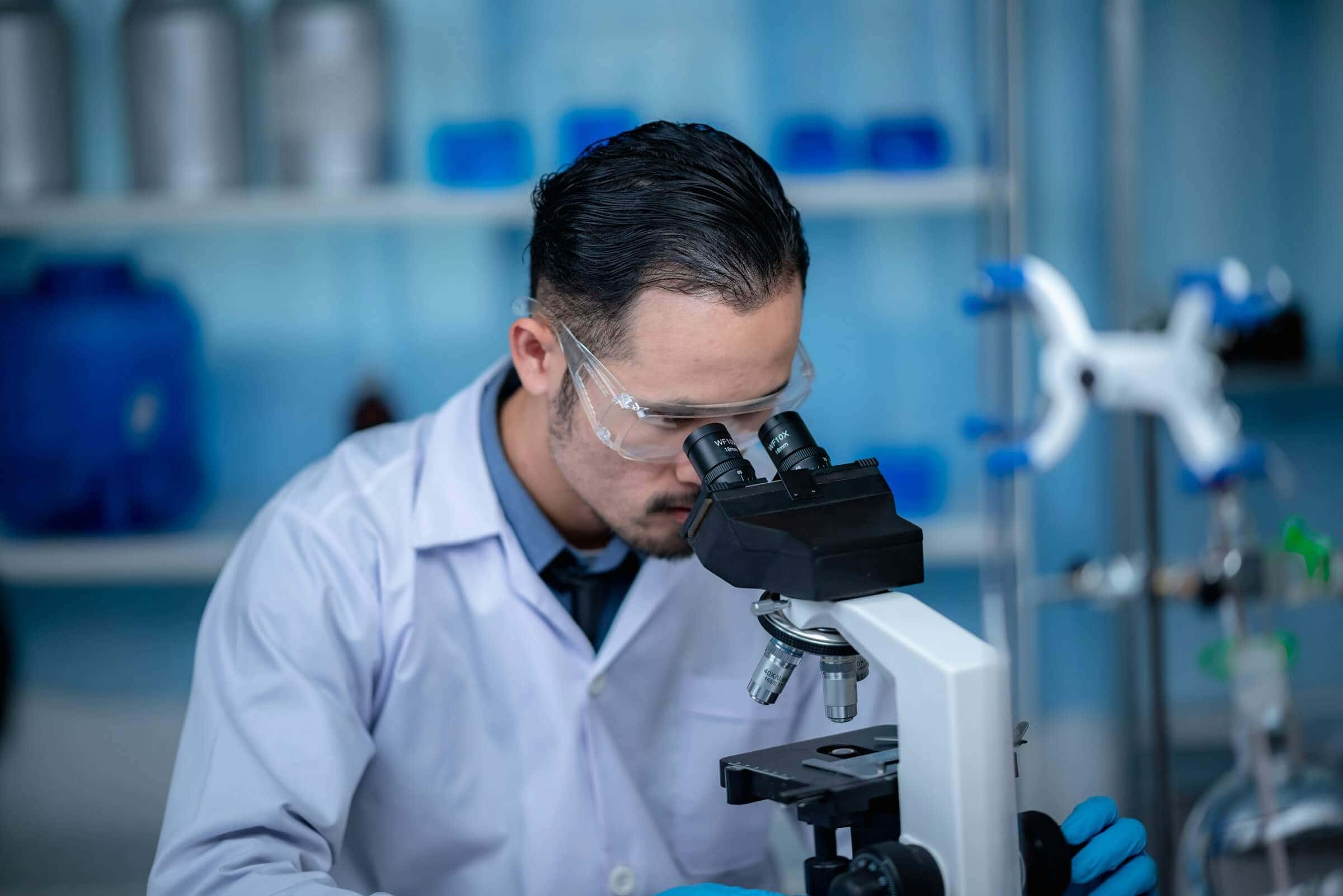
A post-vasectomy semen analysis is a laboratory test that examines a semen sample under a microscope. The lab checks whether sperm are still present, whether any sperm detected are moving, and in what quantities. The goal is to confirm that the vasectomy has successfully blocked sperm from reaching the semen.
The result that doctors look for is either complete azoospermia - meaning no sperm detected at all - or a finding of fewer than 100,000 rare non-motile sperm per millilitre.
The sample must be fresh. If it is tested within two hours of collection, azoospermia or the rare non-motile sperm threshold is sufficient to stop contraception. If the sample is older than two hours, doctors require complete azoospermia before giving the all-clear.
Why Does It Matter? Can a Vasectomy Actually Fail?
Yes. And this surprises many men.
Vasectomy is highly effective - the overall post-procedure pregnancy rate sits at roughly 0.58%, or about 1.97 pregnancies per 1,000 persons per year, according to a large US study that analysed data from nearly 490,000 vasectomised men (2). That same study found something important: the absence of a post-vasectomy semen analysis was independently associated with increased odds of vasectomy failure.
Failure typically happens in one of two ways. The first is early surgical failure - where a technical error means the vas deferens was not properly occluded. The AUA reports the technical failure rate is between zero and one per cent (1). The second is late recanalization - a process in which cells grow back across the cut ends of the vas deferens and reconnect them.
A case report documented paternity occurring seven years after vasectomy, with the late recanalization rate estimated at approximately 1 in every 2,000 cases (3).
None of this means vasectomy is unreliable. It means the PVSA is what transforms a good procedure into a confirmed result.
What the Guidelines Actually Say
In the United States, the AUA's 2026 guidelines allow a PVSA to be submitted as early as eight weeks post-procedure, with most clinicians targeting eight to ten weeks. Clearance can be given after a single uncentrifuged sample showing complete azoospermia, or no more than 100,000 rare non-motile sperm per millilitre - provided the sample is analysed within two hours of collection. If the sample is older than two hours, only complete azoospermia is accepted (1).
The UK takes a more conservative position. Joint guidelines from the Association of Biomedical Andrologists, the British Andrology Society (BAS), and the British Association of Urological Surgeons state that PVSA should not occur until at least 12 weeks after surgery and after a minimum of 20 ejaculations. Laboratories must examine samples within four hours of production, and if non-motile sperm are found, a repeat sample must be assessed within one hour. Special clearance - where a small number of non-motile sperm remain - requires two separate samples meeting the under 100,000 non-motile sperm per millilitre threshold, and cannot be granted if any motile sperm are present (4).
In Australia, the guidelines suggest a special clearance criterion: two ejaculate samples showing fewer than 100,000 non-motile sperm per millilitre, with at least seven months having passed since the vasectomy. The Royal College of Pathologists of Australasia (RCPA) specifies that post-vasectomy clearance testing must assess semen volume, sperm number and/or concentration, and sperm motility (5).
Your doctor may follow a slightly different timeline depending on the technique used and the clinic's protocol, but the underlying principle is the same across all guidelines: do not assume success until a test confirms it.
What Happens If Sperm Are Still Found?
If your PVSA test shows motile sperm within the first six months that does not automatically mean your vasectomy has failed permanently. The AUA notes that approximately 30% to 75% of men in that situation will eventually reach azoospermia or the acceptable non-motile threshold over a follow-up period (1). Additional PVSAs at four to six week intervals are typically recommended.
Motile sperm found more than six months after the vasectomy is a different matter. That signals a technical failure, and a repeat vasectomy may be needed.
In any scenario, the path forward is clear only because a test was done. Without the PVSA, the decision is a guess.
Making It Easier
One of the practical barriers to completing a PVSA has always been the logistics - travelling to a clinic, producing a sample on-site, and getting it tested within the right timeframe. Home-based testing has changed that considerably. Researchers showed that mail-in PVSA kits achieved compliance rates of 69% at 18 weeks and 82% at 40 weeks across more than 16,000 patients (6) - significantly better than traditional in-clinic models.
If you have had a vasectomy and have not yet completed your post-vasectomy semen analysis, Sapyen's vasectomy test is designed for exactly this situation - a clinically supported, at-home option that fits into your life without clinic visits or scheduling headaches. It is the kind of follow-through the procedure was always meant to have.
Post Vasectomy Semen Analysis
$99.00
$200.00
Had a vasectomy? Don’t assume you’re in the clear. Sperm can remain for months, and pregnancy is still possible. Sapyen’s Post-Vasectomy Semen Analysis (PVSA) confirms whether your procedure was successful by checking for any remaining sperm in your sample. Recommended… read more

References
https://www.auanet.org/guidelines-and-quality/guidelines/vasectomy-guideline
https://link.springer.com/article/10.1186/s13256-020-02374-0
https://www.auajournals.org/doi/10.1097/JU.0000000000004185
FAQs
How many ejaculations are needed before a post-vasectomy semen analysis?
Most guidelines recommend waiting until you have had around 20 ejaculations before submitting your first semen sample. This helps clear any remaining sperm from the reproductive tract and improves the accuracy of the test. Your doctor may also recommend waiting a specific number of weeks after the procedure.
Can I stop using contraception if my vasectomy was done successfully?
No. A vasectomy should not be considered effective until a post-vasectomy semen analysis confirms that no sperm, or only an acceptable number of rare non-motile sperm, are present in the semen. Until you receive medical clearance, you should continue using alternative contraception to prevent pregnancy.