Table of Contents
- What is male fertility score and what does it actually measure?
- How is a male fertility score calculated and what are its limits?
- What further tests complement a semen analysis?
- How your male fertility score guides conception and treatment planning
- Key takeaways
- Why I think the male fertility score conversation is missing the point
- Get a clinically processed male fertility assessment from home
- FAQs
A male fertility score is an aggregate interpretation of multiple semen analysis parameters, not a single standardized medical number, used to evaluate a man's reproductive potential. Clinicians and online tools derive this score from measurements including sperm count, motility, morphology, concentration, and semen volume. Understanding what these parameters mean, how they combine, and where their limits lie is the foundation of any serious male fertility assessment. Whether you are trying to conceive naturally or preparing for IVF, knowing what your results actually tell you changes how you act on them.
What is male fertility score and what does it actually measure?
A male fertility score is not a single universally standardized clinical value. It is an interpretive summary drawn from a standard semen analysis, which assesses multiple biological parameters simultaneously. No single number can fully capture reproductive potential, which is why clinicians read results as a profile rather than a pass or fail grade.
The parameters that feed into any fertility score interpretation include:
- Semen volume: The total fluid produced per ejaculate, with a lower reference value of 1.4 to 1.5 mL per WHO 2021 standards
- Sperm concentration: The number of sperm per milliliter of semen, with a threshold of 16 million per mL
- Total sperm count: The total number of sperm in the ejaculate, with a reference lower limit of 39 million
- Progressive motility: The percentage of sperm moving forward purposefully, with a reference value of 30%
- Total motility: All moving sperm combined, with a threshold of 42%
- Morphology: The percentage of sperm with normal shape, assessed at 4% using strict Kruger criteria
- Vitality: The proportion of live sperm in the sample
These WHO 6th Edition thresholds represent the lower reference limits derived from fertile men who conceived within 12 months. Falling below one or more of these values does not mean infertility. It means your results warrant closer evaluation.
When a clinician or calculator combines these parameters into a male fertility score or rating, they are weighting each variable against these reference ranges. A man with normal concentration but poor morphology will score differently than a man with borderline motility and normal morphology, even if both receive a similar summary label. The score is a starting point for conversation, not a verdict.

How is a male fertility score calculated and what are its limits?
No universal, clinically standardized single fertility score currently exists in reproductive medicine. What you encounter on testing platforms and online calculators are educational estimates built on WHO reference cutoffs and weighted combinations of semen parameters. They serve a real purpose. They just do not replace a full laboratory report.
Common limitations of fertility score estimates include:
- Single-number reductionism: Collapsing six or more parameters into one figure loses diagnostic nuance
- Calculator variation: Different tools weight parameters differently, producing different scores from identical data
- No clinical consensus: No professional body such as the AUA or ASRM has endorsed a single fertility score formula
- Phenotype loss: Clinicians categorize results as oligozoospermia (low count), asthenozoospermia (poor motility), or teratozoospermia (abnormal morphology) because these phenotype classifications directly guide treatment. A single score obscures this.
Sample collection also materially affects any score. Abstinence duration is one of the most significant variables. WHO guidelines recommend 2 to 7 days of abstinence before collection, with research supporting a 3 to 4 day window to reduce variability. Collecting too soon after ejaculation reduces volume and count. Waiting too long inflates count but reduces motility. Temperature during transport and the time between collection and analysis also shift results.
Pro Tip: Follow the sample collection instructions provided with your test kit precisely. Even a one-day deviation from the recommended abstinence window can shift your motility reading by a clinically meaningful margin.
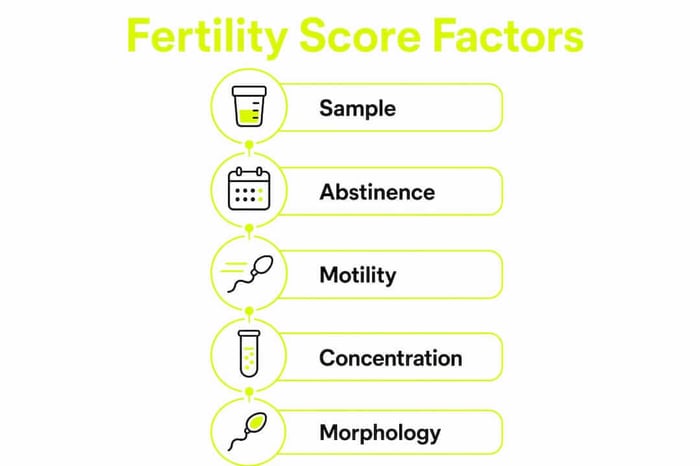
Online fertility score calculators are educational reference tools, not diagnostic instruments. They help you understand where your parameters sit relative to reference ranges. Clinical management always prioritizes standardized laboratory data over calculator outputs.
What further tests complement a semen analysis?
Semen analysis is the starting point for male fertility assessment, not the finish line. When results fall outside reference ranges, or when a couple has been trying to conceive without success for 12 months or more, additional testing becomes necessary.
AUA and ASRM guidelines follow a structured algorithm: semen analysis first, then targeted hormonal and genetic testing based on what the semen report reveals. This approach reflects the multifaceted nature of male reproductive health.
Key complementary assessments include:
- Hormonal evaluation: Testosterone, FSH, LH, and prolactin levels help identify endocrine causes of oligozoospermia or azoospermia
- Genetic testing: Men with azoospermia or severe oligozoospermia may carry Y-chromosome microdeletions or chromosomal abnormalities such as Klinefelter syndrome
- Sperm DNA fragmentation: Measures the integrity of the DNA inside sperm cells. High fragmentation rates are linked to recurrent miscarriage and IVF failure even when standard semen parameters appear normal
DNA Fragmentation Test

$399.00
$500.00
While this test includes our Core Semen Analysis—measuring count, movement, and shape—our DNA Fragmentation test also reveals the quality of the genetic material inside your sperm, also known as a DNA Fragmentation Index. High fragmentation can impact conception and pregnancy… read more
- DNA methylation analysis: An advanced biomarker assessment that evaluates epigenetic integrity of sperm, available through platforms like Sapyen's SpermEGT DNA methylation test
- Antisperm antibody testing: Identifies immune-mediated sperm dysfunction that standard analysis cannot detect
- Functional sperm tests: Tools like Cap-Score assess sperm's ability to undergo capacitation, a biological process required for fertilization
One important finding from recent research: a study of 199 men undergoing ICSI found similar fertilization rates between low and normal Cap-Score groups. This confirms that no single functional score reliably predicts fertilization outcomes in isolation. Advanced diagnostics add layers of information, but they work best as part of a complete clinical picture.
AI-driven analysis is improving the accuracy and reproducibility of sperm morphology, motility, and concentration classification. These tools reduce the subjectivity that has historically affected manual semen analysis, making results more consistent across laboratories.
How your male fertility score guides conception and treatment planning
Understanding your semen parameters gives you a framework for decisions, not a fixed outcome. Men and couples who know their fertility profile can target interventions precisely rather than guessing.
Here is how to use your results practically:
- Identify your phenotype. If your count is low, that is oligozoospermia. If motility is the primary issue, that is asthenozoospermia. Each phenotype has a different clinical pathway, from lifestyle changes to surgical intervention to assisted reproduction.
- Repeat the test before acting. Semen parameters fluctuate naturally. A single abnormal result does not confirm a problem. Most clinicians recommend a second analysis 2 to 3 months after the first, since sperm take approximately 74 days to mature.
- Seek specialist evaluation for borderline results. A result that sits just below a reference threshold warrants a conversation with a urologist or andrologist, not immediate panic or dismissal.
- Use results to guide treatment choices. Men with mild oligozoospermia may respond to lifestyle changes such as reducing heat exposure, stopping smoking, or correcting nutritional deficiencies. Men with severe azoospermia may need surgical sperm retrieval for ICSI.
- Remember that a normal score does not guarantee conception. Female factors contribute to roughly half of all infertility cases. A normal male fertility assessment means the male factor is not the primary barrier, but it does not close the investigation.
- Optimize collection conditions for accuracy. Sample handling conditions including abstinence interval and temperature control during analysis significantly influence semen parameters. Collect at home under the right conditions and use a platform that preserves sample integrity during transport.
Pro Tip: If you are using an at-home testing service, choose one that physically stabilizes the sample during transit rather than relying on algorithmic correction after the fact. Biological preservation produces more accurate motility readings than post-transport estimation.
A normal fertility score does not mean you are done. An abnormal one does not mean you cannot conceive. Both results are information, and information is what drives better decisions.
Key takeaways
A male fertility score is a composite interpretation of semen analysis parameters, and its value lies in guiding further evaluation rather than delivering a final verdict on reproductive potential.
| Point | Details |
|---|---|
| Score is not one number | A fertility score combines volume, count, motility, morphology, and concentration into an interpretive profile. |
| WHO thresholds set the baseline | Reference values from the WHO 6th Edition 2021 define the lower limits used in fertility score calculations. |
| Sample conditions affect accuracy | Abstinence window, temperature, and collection timing all shift semen parameters and score outcomes. |
| Phenotypes guide treatment | Clinicians use categories like oligozoospermia and asthenozoospermia, not a single score, to direct clinical pathways. |
| Advanced tests add depth | DNA fragmentation, DNA methylation, and hormonal panels reveal what standard semen analysis cannot. |
Why I think the male fertility score conversation is missing the point
The phrase "male fertility score" is everywhere right now, and I understand why it resonates. People want a number. A number feels concrete. It feels like something you can act on. But after working in this space, the single-score framing concerns me more than it helps.
The real value of a semen analysis is not the summary rating. It is the parameter breakdown. A man with a "moderate" fertility score could have excellent count and concentration but critically low morphology, which changes his IVF protocol entirely. A man with a "low" score might have one borderline parameter that responds to a targeted lifestyle change within three months. Neither of those stories is told by a single number.
What I have seen consistently is that men who understand their individual parameters make better decisions than men who fixate on a composite score. They ask better questions in clinic. They follow through on repeat testing. They engage with the process rather than waiting for a verdict.
The technology is genuinely improving. AI-assisted analysis is reducing the subjectivity that has historically made semen analysis results vary between labs. Platforms like Sapyen are building clinical-grade infrastructure that makes this level of testing accessible outside of a clinic setting. That matters enormously for male participation in fertility care.
But the technology does not change the fundamental truth: fertility assessment is a process, not a score. Use the number to start the conversation. Then go deeper.
Get a clinically processed male fertility assessment from home
If you want results you can actually act on, you need more than a calculator estimate. Sapyen's advanced semen analysis delivers a full parameter breakdown processed through accredited laboratories using WHO-aligned methodologies, starting at $149.
For men who want the deepest possible picture of their reproductive health, Sapyen's DNA Fragmentation Test adds DNA Fragmentation analysis to your standard semen results. You collect at home, ship your sample, and receive a clinically interpreted report. The process is straightforward, and results integrate directly into IVF clinic workflows with partners including RMA North America, Monash IVF, and CREATE Fertility.
FAQs
Does male fertility score decline with age?
Yes. Male fertility scores do decline with age. While men produce sperm continuously, age-related changes, including reduced semen volume, lower sperm motility (movement), and increased sperm DNA fragmentation, begin to accelerate after age 35, with a more pronounced drop-off observed in men over 40 to 45.