Table of Contents
Sperm freezing rarely comes up at a convenient time. Most men first hear about it when they're already dealing with a significant moment in life, whether it be a medical condition, injury or just a point in time where you want some security for the future.
The information isn't complicated — the timing just tends to be bad.
The good news: if you're reading this now, before any of that, you're already ahead. Here's what the sperm freezing process actually looks like.
What Is Sperm Freezing?
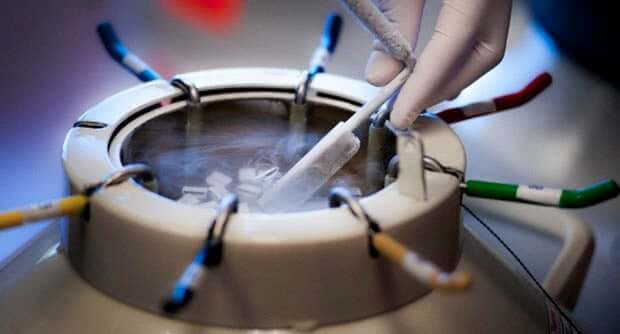
Sperm freezing — medically called sperm cryopreservation or sperm banking — is the process of collecting, testing, and storing sperm at very low temperatures (around −196°C) using liquid nitrogen. At that temperature, biological activity stops entirely, and the sperm quality is maintained for years without any deterioration.
Sperm Freezing is most commonly used as a safeguard for future family planning. When needed, the sample is thawed and used in fertility treatments such as IVF (In Vitro Fertilisation) or IUI (Intrauterine Insemination).
Who Should Consider Sperm Freezing?
There's no single profile. Men consider this for a range of reasons:
Medical treatment ahead: Chemotherapy, radiation, and some surgical procedures can permanently affect sperm production. Freezing before treatment protects future fertility. Sperm freezing is recommended as a step before medical treatments, especially cancer, in order to protect future fertility.
Gender-affirming care: Trans women and non-binary individuals assigned male at birth may choose to bank sperm before hormone therapy or surgery.
Delaying parenthood: In cases where men are prioritizing career or lifestyle at present and do not plan on having children, sperm freezing will be an important method to protect them from the risk of decreasing quality of sperm due to age.
Low sperm count or poor motility: Freezing during a period of better sperm health gives more to work with later.
Vasectomy or hazardous occupation: Some men bank sperm before a vasectomy or if their job involves chemical or radiation exposure.
How Does Sperm Freezing Work?
The process doesn't require a hospital stay - it can now be completed from home.
Consultation and testing: A fertility clinic assesses sperm quality through a semen analysis — looking at count, movement (motility), and shape (morphology).
Sample collection: The semen sample can be produced at home via the Sapyen test kit. The sample is then transported to the lab.
Preparation: The lab adds a cryoprotectant — a solution that prevents ice crystals from damaging cells during freezing.
Freezing and storage: The sample is gradually cooled before being stored in liquid nitrogen tanks. Australian clinics follow guidelines set by the Reproductive Technology Accreditation Committee (RTAC).
Most clinics recommend producing two to three samples over several days to maximise the amount of usable sperm for future use.
The good news is that sperm freezing is now easier to access than ever - and more affordable. Contact Sapyen to find out how you can freeze your sperm for just $1 for the first 12 months (terms and conditions apply).

Benefits and Risks
Benefits:
Preserves fertility before undergoing medical treatments that may cause permanent damage
Gives men (and their partners) flexibility around the timing of parenthood
Sperm can remain viable for many years — the British Fertility Society (BFS) has documented successful pregnancies from sperm stored for over 20 years.
Risks and limitations:
Not all sperm survive the freeze-thaw process. Typically 50–80% remain viable post-thaw, though this varies by individual.
Freezing won't improve poor sperm quality — it preserves what's there
Storage costs accumulate over time; Australian labs generally charge annual fees after an initial period
For some men, particularly those banking sperm ahead of a serious illness, the process can be emotionally confronting.
What Does Sperm Freezing Cost?
The cost of sperm freezing varies depending on where you live, the clinic you choose, and how long you plan to store your samples. While sperm banking is often associated with cancer treatment or fertility preservation before medical procedures, an increasing number of men are choosing to freeze sperm for personal, professional, or family planning reasons.
In Australia, sperm freezing is generally not covered by Medicare for most patients. However, some individuals may qualify for financial assistance through government-supported fertility preservation programs, particularly if they are undergoing cancer treatment or have specific medical conditions that may affect future fertility.
For those paying privately, there are usually two separate costs to consider: the initial collection and freezing process, and the ongoing storage fees. The upfront cost for sperm collection, assessment, and cryopreservation commonly falls between AUD $500 and $700. Some fertility centres include several months of storage within this fee. After that period, annual storage charges typically range from AUD $280 to $480, depending on the facility and storage arrangements.
Costs vary internationally. In the United Kingdom, the initial freezing process generally costs between £400 and £750, with yearly storage fees often ranging from £300 to £390. In the United States, patients can expect to pay anywhere from USD $500 to $1,500 for testing, processing, and freezing, followed by annual storage fees that commonly range from USD $150 to $600.
Countries such as India often offer more affordable fertility preservation services, with sperm freezing costs frequently falling between USD $105 and $195, making it one of the lower-cost options globally.
The encouraging news is that sperm freezing has become more accessible and convenient than ever before. Advances in fertility preservation technology, combined with growing awareness around reproductive planning, have helped make the process available to a wider range of men. As mentioned already, Sapyen offers an affordable pathway to fertility preservation, including the opportunity to freeze sperm for just $1 for the first 12 months, subject to applicable terms and conditions.
Success Rates — What to Expect
Frozen sperm can result in pregnancy, but outcomes depend on several factors: the woman's age and fertility, the number of viable sperm post-thaw, and the type of treatment used.
A 2019 study in Fertility and Sterility found that IVF success rates using frozen sperm were comparable to those using fresh sperm in most situations. For IUI, success rates per cycle are typically 10–20%. IVF with ICSI (Intracytoplasmic Sperm Injection) — where a single sperm is injected directly into an egg — generally offers better odds when sperm quality is a concern. So, sperm freezing does work and is worth considering if you're not ready for a family just yet.
Your fertility specialist can give a more accurate picture based on your specific situation.
References
https://www.britishfertilitysociety.org.uk/fei/cryopreservation-of-sperm/
https://www.frontiersin.org/journals/endocrinology/articles/10.3389/fendo.2024.1408662/full
FAQs
What is the ideal age for freezing sperm?
There's no strict cut off, but earlier is generally better. Sperm quality and DNA integrity tend to decline gradually after 40. If you're considering it, there's no benefit in waiting.
How many samples should you store when freezing sperm?
Most fertility specialists recommend at least two to three samples — enough material for multiple treatment cycles, since some sperm are lost during thawing and not every cycle results in pregnancy.
Can I get pregnant with frozen sperm?
Yes. Many pregnancies have resulted from frozen sperm. Success depends on both partners' fertility and the treatment approach. A fertility specialist can give you a realistic expectation based on your circumstances.