
Table of Contents
Sperm cryopreservation, commonly called sperm banking or sperm freezing, is the process of collecting, testing, and storing sperm at very low temperatures for future use. It has been around for decades and is now a standard part of fertility care for men across a wide range of situations.
If you are undergoing cancer treatment, considering a vasectomy, working in a high-risk occupation, or you may already have kids, but just don't want them at this point in time, freezing your sperm is worth knowing about. Here is a detailed explanation of why men choose to do sperm cryopreservation and how it can benefit them.
6 Benefits of Sperm Cryopreservation
Preserving Younger Sperm
Sperm quality does not stay constant throughout a man's life. A large systematic review drawing on data from nearly 94,000 men across 90 studies found a consistent age-related decline in semen volume, sperm count, motility (how well sperm move), and normal morphology (the shape and structure of sperm), along with rising levels of DNA damage in sperm.
Men who bank sperm in their 20s or early 30s are essentially storing a sample taken when their reproductive health is typically at its peak. If they need assisted conception later in life, those younger sperm samples are still available.
Assisted Reproduction Support
Even outside of cancer or major surgery, some men bank sperm specifically to support assisted reproduction procedures like intrauterine insemination (IUI) or in vitro fertilisation (IVF). Sperm cryopreservation is particularly useful for men who have difficulty providing a sample on the day of a procedure, those with very low sperm counts, or couples who need scheduled treatment cycles that cannot accommodate an unpredictable sample collection.
A Safety Net Before Vasectomy
A vasectomy is meant to be permanent, but circumstances can and do change - relationship status, life goals, or simply a change of mind. Reversals are possible but not guaranteed, and they involve an invasive procedure with variable outcomes.
Sperm cryopreservation beforehand gives men a backup option without the pressure of vasectomy reversal operations, which don’t always work. Research published in the Journal of Urology found that among men who experienced vasectomy reversal failure and had stored sperm, two-thirds went on to have a successful live birth using their cryopreserved sperm via in vitro fertilisation (IVF). It is a relatively small upfront step for a potentially significant long-term benefit.
Long-Term Storage Does Not Reduce Viability
A concern some men have is whether sperm stored for many years is still usable. The evidence is reassuring. A study examining semen samples cryopreserved over a period of 3 to 12 years found no significant difference in post-thaw survival rates compared to more recently frozen samples.
And when it comes to using sperm cryopreservation in fertility treatment, a large study covering 7,969 egg donation cycles found no significant difference in live birth rates between fresh and cryopreserved sperm.
Protection Before Cancer Treatment
This is a well-documented reason for sperm freezing. Chemotherapy and radiation are particularly harmful to sperm-producing cells - and for some men, that damage does not reverse after treatment ends. This is why doctors are now expected to bring up sperm freezing before anything else starts.
The American Society of Clinical Oncology (ASCO) updated its guidelines in 2024 to state that sperm cryopreservation should be offered to all male patients before cancer-directed treatment, and where a standard semen sample is not possible, surgical sperm retrieval should be offered as an alternative. |
Does it actually work? For most men who go on to use their stored sperm, yes. A review drawing on data from over 32,000 cancer patients found that roughly half of those who used their banked sperm later achieved parenthood. Although not an absolute guarantee, being able to arrange sperm cryopreservation through a simple online order or single appointment should be strongly considered.
Importantly, around 89% of adult men and 80% of adolescent boys diagnosed with cancer can successfully bank sperm before treatment starts.
High-Risk Occupations and Unpredictable Circumstances
Men working in the military, emergency services, mining, or other physically demanding environments where groin injuries or exposure to radiation or chemicals is possible often consider sperm cryopreservation as a precaution.
The World Health Organisation (WHO) laboratory manual for semen examination supports cryopreservation for men in dangerous occupations as a form of proactive fertility preservation. |
The logic is straightforward: it is far easier and less expensive to bank sperm before something goes wrong than to attempt surgical sperm retrieval afterwards.

How long can frozen sperm be stored?
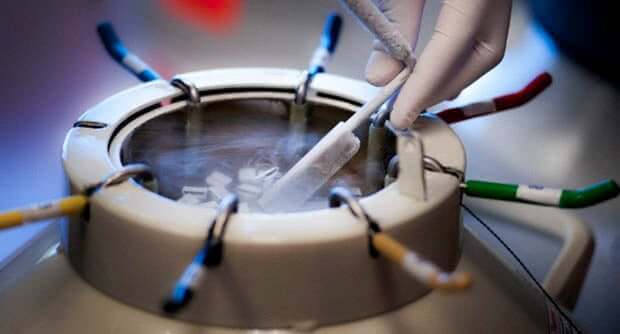
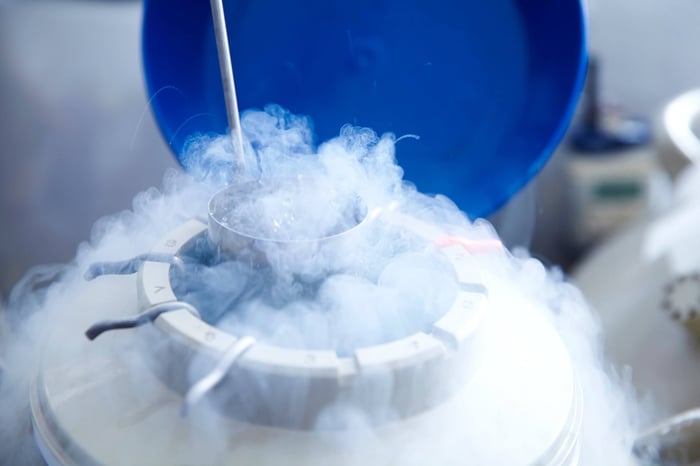
Frozen sperm can remain viable for decades when stored correctly in liquid nitrogen at -196°C. In fact, Brigham and Women's Hospital has reported successful births using sperm that had been frozen for over 40 years.
While many clinics commonly offer storage periods of 5–10 years, storage can often be extended depending on local regulations and individual circumstances. In some regions, the maximum permitted storage duration may be up to 55 years. Storage rules can vary by state or country, so it is best to check with your fertility clinic about the regulations that apply to you.
How much does sperm cryopreservation cost?
The cost of sperm cryopreservation varies depending on the country, clinic, and storage duration. In Australia, the initial freezing procedure generally costs around AUD 500–700, with annual storage fees ranging from AUD 280–480.
In the United Kingdom, initial sperm cryopreservation typically costs between GBP 400 and GBP 750, with yearly storage fees of around GBP 300 and GBP 390.
In the United States, upfront costs usually range from USD 500–1,500, while annual storage fees can vary between USD 150–600.
Compared to many Western countries, India generally offers lower-cost cryopreservation services, with average costs ranging from USD 105 to 195.
The Takeaway
Sperm cryopreservation is not just for men facing serious illness. It is a practical tool for anyone who wants to keep their reproductive options open - whether because of medical treatment, planned surgery, age, occupation, or simply not being ready to start a family yet.
The good news is that sperm freezing is now easier to access than ever - and more affordable. Contact Sapyen to find out how you can freeze your sperm for just $1 for the first 12 months (terms and conditions apply).
 Image Caption
References
FAQs
Does sperm freezing work?
Yes. Sperm freezing can successfully result in pregnancy, although it does not guarantee success. Studies have shown that IVF and ICSI outcomes using frozen sperm are generally comparable to those using fresh sperm. IUI with frozen sperm may have slightly lower success rates per cycle compared to fresh samples, but frozen sperm remains an effective and widely used fertility preservation option.
Is it possible to use frozen sperm for natural conception?
No. Frozen sperm must be thawed and used in a clinical setting — either through IUI or IVF. It cannot be used for natural intercourse.